
Artificial Intelligence (AI) is changing how we live, work, and learn. But along with its growth, important questions are being raised. Can AI help detect pollution sources like illegal brick kilns? Can it predict rare events in finance or medicine? Do people trust tools like ChatGPT, Claude, or Gemini? And can AI be used in an ethical way to improve education?
These questions were explored at AI on the Stepwell, a one-day symposium hosted by Ahmedabad University. Led by faculty members Prithwiraj Mukherjee, Vedant Dev, and Amit Singh, the event brought together experts from fields like computer science, finance, drug discovery, and social sciences. The discussions went beyond technical topics and included ideas from philosophy and the humanities, giving a wider view of AI’s role in society.
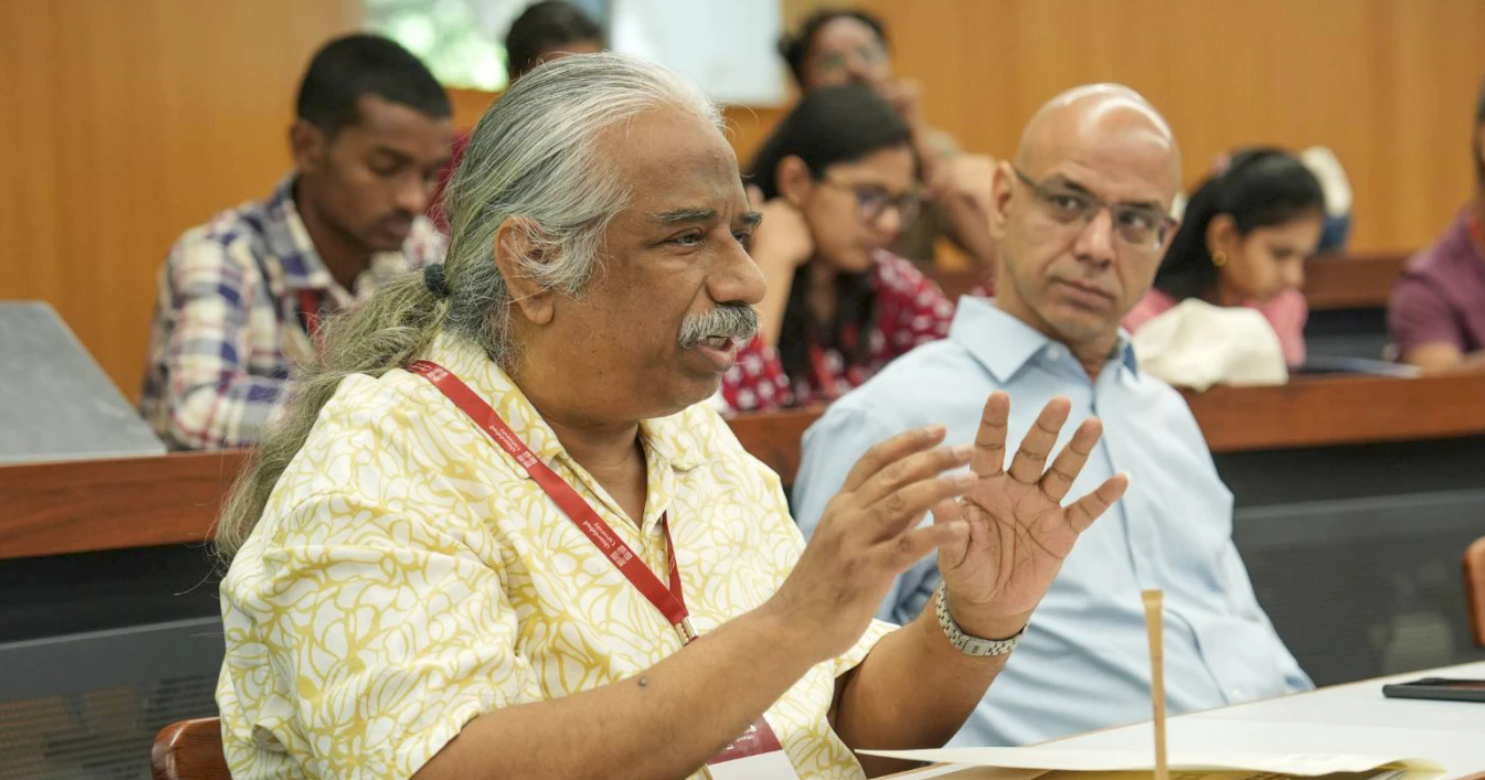
Table of Contents
How AI is Transforming Industries and Everyday Life
Experts at the symposium highlighted how AI is driving major changes across industries. In areas like coding, data science, and supply chains, AI is speeding up workflows and improving efficiency. It is also being used to detect environmental issues, such as illegal brick kilns, and to answer air quality questions through tools like VayuChat.
In business and finance, AI helps predict risks and improve decision-making. However, it still faces challenges. For example, it struggles with complex situations and rare events, such as unexpected drug side effects. In marketing, AI can predict how well social media content will perform, but it may still reflect biases related to age and gender.
Another key area is trust. Research shows that people trust AI differently depending on their knowledge and the importance of the decision. This highlights the need to better understand how AI systems work.
Ethics, Sustainability, and the Future of Learning
The symposium also focused on the ethical use of AI, especially in education. AI can help improve learning outcomes by analysing different types of student data, but it must be used responsibly. Experts stressed that human judgment and strong basic knowledge will remain important, even as AI tools become more common in workplaces.
There were also concerns about the environmental impact of AI. Large data centres require high energy and water usage, which raises questions about sustainability. This calls for the development of more eco-friendly technologies. Overall, the discussions showed that AI is not just about technology. It is also about how knowledge is created, shared, and used across different fields. Ahmedabad University’s initiative reflects the need to study AI from multiple perspectives, combining technical skills with ethical and social awareness.
The Takeaway
AI is not just about tools; it is about thinking. This shows the need to understand concepts, question outputs, and use technology responsibly. Learners must combine technical skills with ethics, critical thinking, and real-world awareness to stay relevant.


