
From unprecedented heatwaves and erratic monsoon cycles to intensified cyclones along the coastlines and fragile ecological shifts in the Himalayan regions, the footprints of climate change in India are impossible to ignore. Today, the connection between climate change and escalating natural disasters is no longer a theoretical debate, it is an economic and humanitarian reality.
Highlighting the severity of this crisis, the Climate Risk Index 2026 officially ranked India among the top ten countries hardest hit by climate disasters. Over the last three decades, India has weathered roughly 430 extreme weather incidents, racking up a staggering $170 billion in economic losses.
As these extreme weather events increase in frequency and severity, isolated emergency responses are no longer enough. Securing a climate resilient India demands a systemic, academic, and policy-driven overhaul.
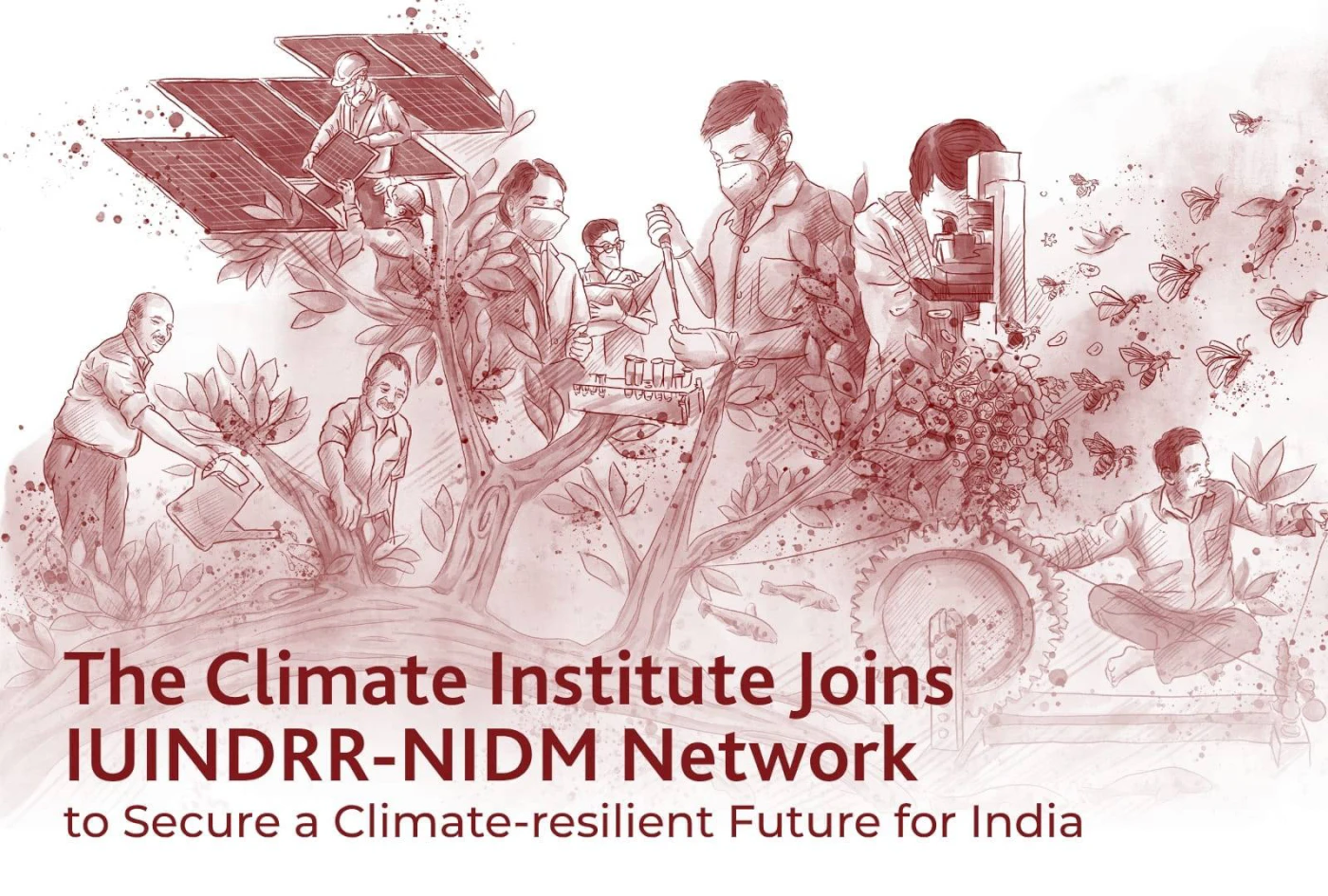
Taking a massive leap toward this vision, The Climate Institute at Ahmedabad University has officially joined the prestigious IUINDRR-NIDM network. This strategic collaboration aims to bridge the gap between scientific research and ground-level disaster risk reduction.
Table of Contents
What is the IUINDRR-NIDM Network?
The National Institute of Disaster Management (NIDM) is India’s premier nodal agency constituted under the Disaster Management Act of 2005. Operating at the heart of India's safety frameworks, NIDM is responsible for capacity building, specialized training, data-driven research, and national policy formulation.
To democratize and expand these efforts, NIDM launched the India Universities and Institutions Network for Disaster Risk Reduction (IUINDRR-NIDM). Built in direct alignment with Agenda 6 of the Prime Minister’s 10-Point Agenda on Disaster Risk Risk Reduction, this network transforms how India prepares for crises. Instead of relying solely on post-disaster relief, the initiative leverages higher education, academic research, public debate, and proactive policy advocacy to shift the national narrative toward mitigation and early preparedness.
Changing the Narrative: The Climate Institute’s Role
By entering the IUINDRR-NIDM network, The Climate Institute at Ahmedabad University brings a wealth of interdisciplinary knowledge to India's disaster management strategy. The partnership will focus heavily on actionable, problem-solving approaches rather than purely theoretical research.
Key areas of focus for this collaboration include:
Why This Partnership Matters for India's Future?
The intersection of education, practice, and governance is where real resilience is built. By anchoring academic expertise into a national state framework like NIDM, this alliance ensures that future climate policies are backed by cutting-edge, empirical data.
As India moves forward into a decade defining its environmental future, collaborations like the one between The Climate Institute and IUINDRR-NIDM offer a blueprint for success. By modernizing disaster risk reduction strategies, India takes a decisive step closer to safeguarding its economy, its diverse ecosystems, and most importantly, the millions of lives on the frontlines of climate change.


