
At a time when global dynamics are changing fast, West Asia has once again become a key centre of geopolitical and geo-economic tension. This conflict is not far away; it is already affecting energy prices, supply chains, and global partnerships.
The Briefing by the Stepwell Centre for Asian Futures at Ahmedabad University was anchored by Professor Niraj Athavle, Professor of Practice of Management at the Amrut Mody School of Management. It also featured Professor Sudeep Chakravarti, Executive Director of the Stepwell Centre for Asian Futures and Professor of Practice at the School of Arts and Sciences.
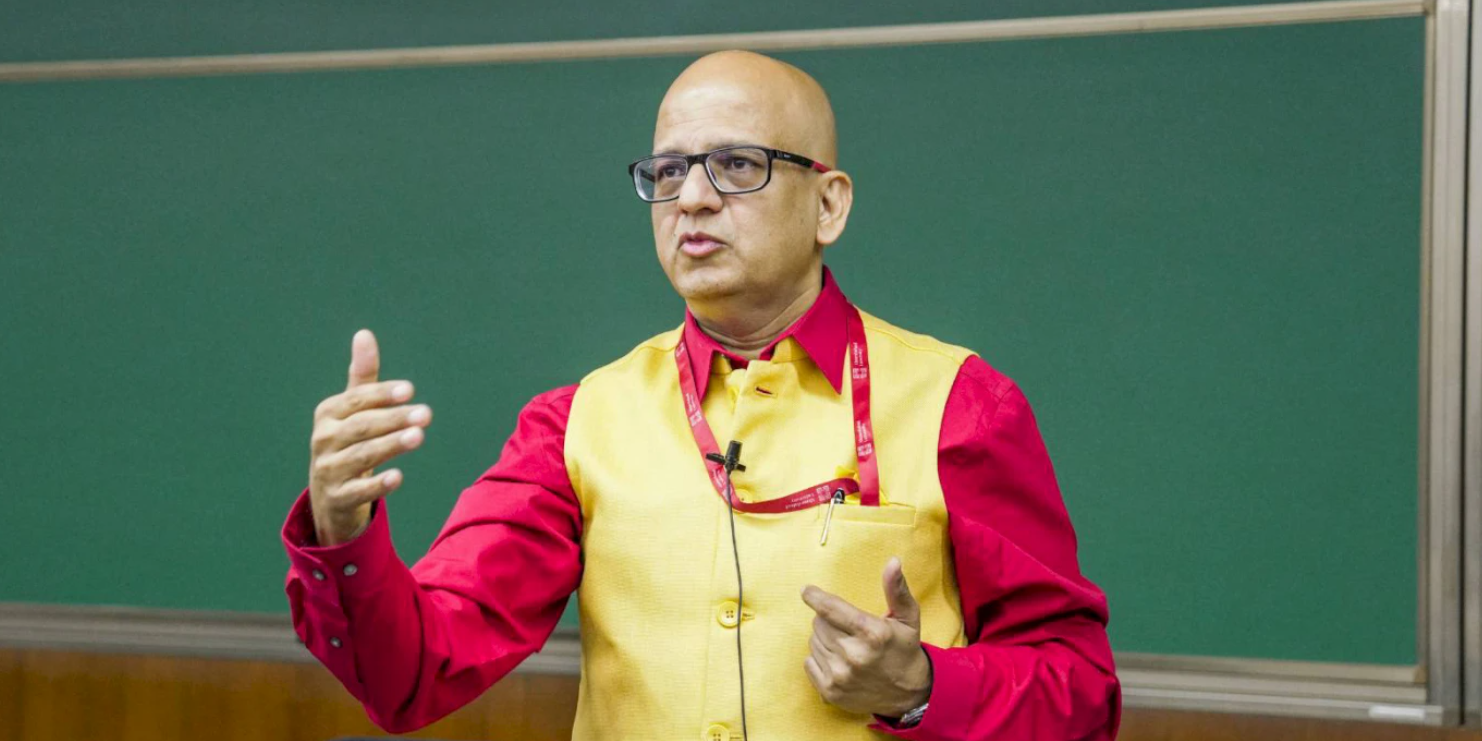
Table of Contents
Energy Disruptions and India’s Search for Stability
One of the biggest impacts of the conflict is the rise in energy price volatility. India imports a large share of its crude oil from West Asia, so any disruption quickly affects the country. This creates risks like supply shortages and higher costs.
To manage this, India is taking several steps. In the short term, there may be a greater use of coal to meet energy demand. At the same time, there is a strong push toward alternative energy sources for the future. India is also trying to reduce its dependence on West Asia. It is exploring oil and gas imports from regions like Southeast Asia, Africa, and the Americas. Negotiations for Russian crude continue, even with sanction-related challenges. In addition, India is working to expand its own hydrocarbon resources. This includes opening new oil and gas fields and speeding up the bidding process for untapped reserves.
Maritime Security and Economic Recalibration
The conflict has increased the importance of key maritime routes, especially chokepoints like the Gulf of Hormuz. As these routes become more sensitive and militarised, India is likely to expand its naval presence in the Arabian Sea, Bay of Bengal, and the wider Indian Ocean Region. Strong maritime security is now essential to protect trade and energy flows.
There are also wider economic concerns. Rising fuel prices can lead to stagflation, where growth slows while prices rise. Disruptions in fertiliser supply may affect farming during important sowing seasons. At the same time, a slowdown in Gulf economies could reduce remittances from Indian workers, affecting many households. Another shift is the growing use of non-US Dollar systems for trade, especially in energy deals. This points to gradual changes in how global trade is conducted.
Summary
The West Asia conflict is not just a regional issue; it is a major turning point. India’s response, through energy diversification, economic planning, and stronger maritime security, will shape its role as a stabilising force in the Indian Ocean Region.


