A Diploma in Computer Science is generally a 3-year technical diploma that introduces students to programming, computer systems, databases, networking, operating systems, web technologies and practical computing. The regular route is commonly available after Class 10, although eligibility and admission rules vary by state, technical board and institution. For example, current 2026 programme pages from Integral University, Usha Martin University and Invertis University list three-year diploma programmes in Computer Science/Computer Science Engineering for Class 10 candidates.
The average tuition fees for the Diploma in Computer Science range between INR 90,000 - 2,00,000 depending on the course type. Some of the famous universities offering a Diploma in Computer Science are Mangalayatan University, Puran Murti Campus, Srinath University, Nirwan University ,Jaipur, and Centurion University.
After completing the diploma, students can apply for entry-level roles in software support, web development, IT support, networking and related areas, depending on their skills and employer requirements. They can also pursue higher education, including B.Tech/B.E. lateral entry, where they meet the eligibility and admission requirements of the relevant university or state authority. Current university examples confirm that diploma holders can be considered for lateral-entry B.Tech routes under specified conditions.
- Diploma in Computer Science Highlights
- What is a Diploma in Computer Science?
- Diploma in Computer Science After 10th
- Why Study Diploma in Computer Science?
- Is Diploma in Computer Science Worth It in 2026?
- Diploma in Computer Science Eligibility Criteria
- Diploma in Computer Science Colleges in India
- Diploma in Computer Science Admission Process 2026
- Diploma in Computer Science Syllabus
- Diploma in Computer Science Vs. BCA
- What Can I Do After a Diploma in Computer Science?
- Diploma in Computer Science Job Opportunities in India
- Diploma in Computer Science FAQs
Diploma in Computer Science Highlights
The following table summarises the key details of a Diploma in Computer Science/CSE. Since diploma education in India is regulated through different state boards, universities and admission systems, eligibility, fees and admission methods can vary.
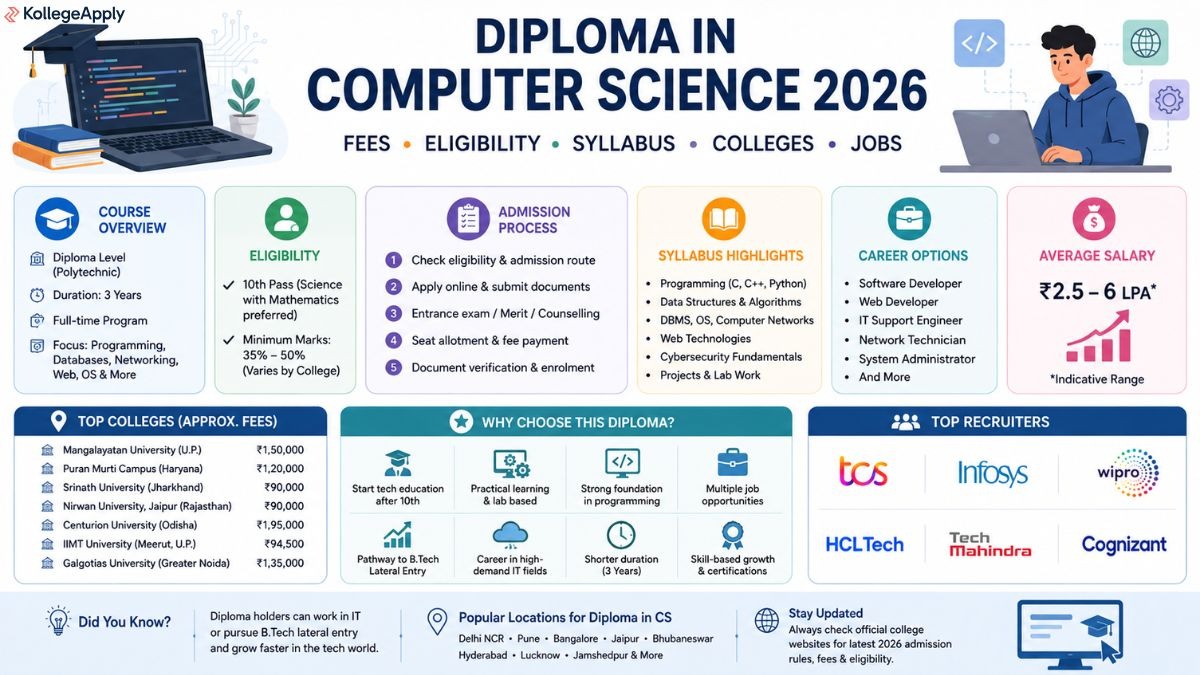
What is a Diploma in Computer Science?
The Computer Science Diploma is a technical training program that prepares students for a career in IT by engaging students in learning fundamental concepts in programming, hardware, networking, software development and more. The delivery method of the program balances academic instruction with project work and lab time which is ideal for students who want to transition into the technology workforce as soon as possible.
The curriculum usually covers basic topics in computer systems, program or programming languages like C/C++ and Python, web technologies, databases, operating systems, and data structure. In addition to that, students learn about the latest IT tools and development platforms.
Diploma in Computer Science After 10th
Students can commonly pursue a Diploma in Computer Science after 10th through a three-year polytechnic or university diploma programme. The regular admission route generally begins after passing Class 10, with some institutions specifying Mathematics and Science as required subjects.
For example, Integral University requires Class 10 or equivalent with Mathematics and Science, while Usha Martin University lists Class 10 as the eligibility for its three-year Diploma in Computer Science Engineering. Invertis University also accepts Class 10 candidates with Mathematics as a compulsory subject.
Why Study Diploma in Computer Science?
A Diploma in Computer Science can be useful for students who want an early and practical introduction to computing. The course combines technical concepts with laboratory work and can provide a foundation for either employment or further study. The Key benefits include:
- Early technical education: Students can begin computer-focused technical education after Class 10.
- Practical learning: Diploma curricula generally include laboratory work, programming exercises and projects.
- Programming foundation: Students learn programming and problem-solving concepts that can support software and web development.
- Multiple career options: Graduates can explore IT support, networking, web development, testing and other technical roles.
- Lower time commitment than a four-year B.Tech: The regular diploma route is generally three years after Class 10.
- Higher-study pathway: Eligible diploma holders can pursue B.Tech/B.E. through lateral entry where permitted.
- Specialisation opportunities: Students can later build skills in areas such as cloud computing, cybersecurity, AI, data, web development and networking.
- Skill-based progression: Portfolio projects, internships and certifications can strengthen employability.
Is Diploma in Computer Science Worth It in 2026?
Yes, a Diploma in Computer Science can be worth pursuing in 2026, particularly for students who want to enter technical education after Class 10. It provides foundational skills in programming, databases, networking, operating systems and computer systems and can lead to entry-level IT roles or further education.
The value of the diploma depends largely on what the student does alongside the qualification. Building coding projects, learning current development tools, completing internships and developing communication skills can improve career prospects. Students who want an engineering degree can also explore B.Tech/B.E. lateral entry after the diploma, subject to the rules of the state or university.
A Diploma in Computer Science is a good choice if you:
- Want to start computer-related education after Class 10.
- Prefer practical and technical learning.
- Want to explore programming, networking or IT infrastructure.
- Want the option of B.Tech lateral entry later.
- Are willing to build skills beyond the prescribed syllabus.
Diploma in Computer Science Eligibility Criteria
There is no single minimum percentage or eligibility rule that applies to every Diploma in Computer Science programme in India. Requirements differ according to the institution, state technical board and admission route.
For the regular three-year programme, students generally need to have passed Class 10 or an equivalent examination. Mathematics and Science are commonly required or preferred for engineering diploma programmes. Examples from current institutional pages include:
- Integral University: Class 10/equivalent with Mathematics and Science and 35% marks; it also lists a lateral-entry route.
- Usha Martin University: Class 10/equivalent for its three-year Diploma in Computer Science Engineering.
- Invertis University: Class 10/equivalent with Mathematics as a compulsory subject, or Class 12 with Mathematics.
- IIMT College of Polytechnic: Class 10/SSC with a minimum of 35% for the three-year Diploma CSE route.
Note: Students should always check the latest official admission notification before applying because minimum marks, subject combinations, domicile rules and counselling procedures can change.
Diploma in Computer Science Colleges in India
Diploma in Computer Science and Engineering programmes are offered by government polytechnics, private colleges and universities across India. The availability, fees and admission process differ significantly between institutions, so students should compare the programme curriculum, recognition/approval status, infrastructure, placement support and total fees before making a choice. Some institutions that currently list Diploma in Computer Science/CSE programmes include:
Diploma in Computer Science Admission Process 2026
Admission to a Diploma in Computer Science/CSE in 2026 depends on the institute and state. Polytechnic colleges may admit students through a state-level entrance examination and counselling, while universities and private institutions may use qualifying-exam merit, their own entrance examination or a combination of these methods. The General admission process steps to follow are:
Step 1: Check eligibility - Confirm the required Class 10/12 qualification, minimum marks and subject requirements.
Step 2: Check the admission route - Determine whether the institution accepts state polytechnic entrance scores, merit, university-level entrance scores or direct applications.
Step 3: Register - Complete the application form and upload the required documents.
Step 4: Participate in counselling/selection - Candidates may need to participate in counselling or complete an institute-level selection process.
Step 5: Pay the admission fee - After receiving an offer or seat allotment, complete fee payment and admission formalities.
Step 6: Begin the programme - Submit original documents where required and complete enrolment at the institute.
Note: The admission process is therefore not identical across India. For example, Invertis University lists JEECUP, its own IUCET and qualifying-exam merit among its admission routes, while Integral University lists IUET 2026 for its Diploma CSE programme.
College-Based Admission Process:
For Diploma in Computer Science/CSE programmes offered by universities, the admission process may include online registration, document verification, an institute-level entrance examination or merit-based selection, and fee payment. The exact process, application dates and selection criteria can vary by institution. For example, students applying to Centurion University may need to complete the university's application process and follow the admission instructions issued for the relevant academic session.
Step 1: Go to the official website “www.cutm.ac.in” and register on the CUEE 2026 tab section. Fill in your basic information and pay the application fees online. This will generate your application ID.
Step 2: The Centurion University Entrance Examination to test candidates for acceptance is in the form of an examination (CUEE). This examination will be in the form of an online multiple-choice based examination. The dates of the examination will be notified to candidates by email, SMS, and on the official website. Candidates can write the examination by connecting through a remote proctored examination
Step 3: Provisional admission is offered by the university to qualified candidates, you can confirm your admission by paying your initial admission fees through online payment (via UPI/Card/Net Banking) or to deposit the money directly with the university campus by using the details admitted to you in the offer.
Note: Admission procedures, entrance examinations and deadlines can change from one academic year to another. Students should check the university's official admission notification for the latest 2026–27 requirements before applying.
Required Documents:
The documents required for admission to a Diploma in Computer Science may vary depending on the institution, admission route and state-level regulations. Candidates are advised to check the latest admission notification of their chosen college or university, as some institutions may ask for additional documents during verification or counselling.
Diploma in Computer Science Syllabus
The syllabus for the computer science diploma can span somewhere between 2-6 semesters depending on the university. For your reference, given below is the Diploma in Computer Science syllabus followed at the Nirwan University, Jaipur.
Diploma in Computer Science Vs. BCA
Diploma in Computer Science and Bachelor of Computer Applications (BCA) are popular undergraduate-level programs in the field of computer science and information technology. They both provide students with the basic computing skills, although they vary in a number of ways, including length, academic limitations, and career opportunities. The main differences between each of the programs are summarized in the table below:
What Can I Do After a Diploma in Computer Science?
After completing a Diploma in Computer Science, students have several options. The most suitable route depends on their career goals, finances, academic performance and eligibility.
1. Get an entry-level IT job - Students can apply for technical support, web development, networking, software support and related positions.
2. Pursue B.Tech/B.E. through lateral entry - Eligible diploma holders can apply for B.Tech/B.E. lateral entry, which can allow admission directly into the second year of an engineering degree. However, eligibility varies by state and university.
For example, Integral University lists a three-year Diploma/B.Sc. route for B.Tech lateral entry subject to its stated eligibility, while Invertis University specifies a diploma-based lateral-entry route with its own percentage and entrance requirements.
3. Continue developing technical skills - Students can specialise in:
- Full-stack development
- Cloud computing
- Cybersecurity
- Data analytics
- Artificial intelligence and machine learning
- Networking
- DevOps
- Mobile application development
4. Pursue other higher-study options - Depending on the institution's admission rules, diploma holders may also explore BCA or other undergraduate programmes. BCA lateral entry after diploma is not a universal pathway, so candidates must check the specific university's eligibility criteria.
Diploma in Computer Science Job Opportunities in India
A Diploma in Computer Science can prepare students for entry-level technical roles across IT services, software development, networking, hardware support, web development and other technology-related areas. Actual job opportunities depend on the candidate's technical skills, internships, projects, location and employer requirements. The following salary figures are indicative ranges rather than guaranteed averages:
Top Recruiters for Diploma in Computer Science Graduates
Depending on the role and recruitment requirements, diploma holders may find opportunities with IT service companies, startups, e-commerce businesses, telecom companies, educational institutions and local technology firms. Recruiters frequently associated with entry-level technology roles include TCS, Infosys, Wipro, HCLTech, Tech Mahindra and Cognizant, although eligibility varies by position and employer.
Students should not select a diploma solely on the basis of recruiter names. The quality of the institute's curriculum, placement record, internship opportunities, technical facilities and industry exposure should also be considered.
Diploma in Computer Science FAQs
What is a Diploma in Computer Science?
A Diploma in Computer Science is a technical programme covering programming, databases, networking, operating systems and web technologies.
Can I pursue a Diploma in Computer Science after 10th?
Yes, a Diploma in Computer Science can generally be pursued after Class 10, subject to the institute's eligibility and subject requirements.
How long is a Diploma in Computer Science?
A Diploma in Computer Science generally takes three years after Class 10, divided into semesters with theory and practical training.
What are the subjects in a Diploma in Computer Science?
A Diploma in Computer Science commonly includes programming, DBMS, data structures, networking, operating systems and web technologies.
Can I do B.Tech after a Diploma in Computer Science?
Yes, eligible Diploma in Computer Science holders can pursue B.Tech through lateral entry, subject to state or university admission rules.
Is a Diploma in Computer Science good for jobs?
Yes, a Diploma in Computer Science can lead to entry-level roles in IT support, web development, networking and software-related fields.
What is the salary after a Diploma in Computer Science?
Graduates with a Diploma in Computer Science may earn around INR 2.5–6 LPA initially, depending on skills, role, location and employer.
Can I do BCA after a Diploma in Computer Science?
Yes, a Diploma in Computer Science holder may pursue BCA, but lateral entry or first-year admission depends on the university's rules.
Is coding required for a Diploma in Computer Science?
No, prior coding knowledge is generally not required for a Diploma in Computer Science, as programming is usually taught from the basics.
What can I do after a Diploma in Computer Science?
After a Diploma in Computer Science, students can pursue jobs, B.Tech lateral entry or skills in cloud, cybersecurity, AI, data and full-stack development.