Students with an interest in pursuing a course that spans 4 years with 6 months to one year of internship and offers comprehensive physiotherapy education can opt for a BPT course. The BPT syllabus consists of core subjects, practical training, internships, and several other learning components designed to help students gain knowledge and skills in the healthcare sector. To become a professional physiotherapist, students study various BPT subjects covering areas such as Health Psychology, First Aid and Emergency Care, Pharmacology, Medical Ethics and Laws, Biomechanics and Kinesiology, and many more.
During the 1st year BPT syllabus, students are introduced to foundational subjects such as Anatomy, Physiology, and Health Psychology, which help build a strong understanding of the human body and healthcare principles. In the later years, the physiotherapy syllabus gradually shifted towards more specialized subjects, including Physiotherapy in Orthopaedics, Physiotherapy in Neurology, Physiotherapy in Sports, and other advanced areas of practice. After completing four years of academic study, students are required to undergo a 6-month to 1-year internship to gain real-world clinical exposure as part of the BPT syllabus. Upon graduation, candidates can pursue career opportunities as Clinical Physiotherapists, Sports Rehabilitation Specialists, Pediatric Physiotherapists, and several other healthcare professionals.
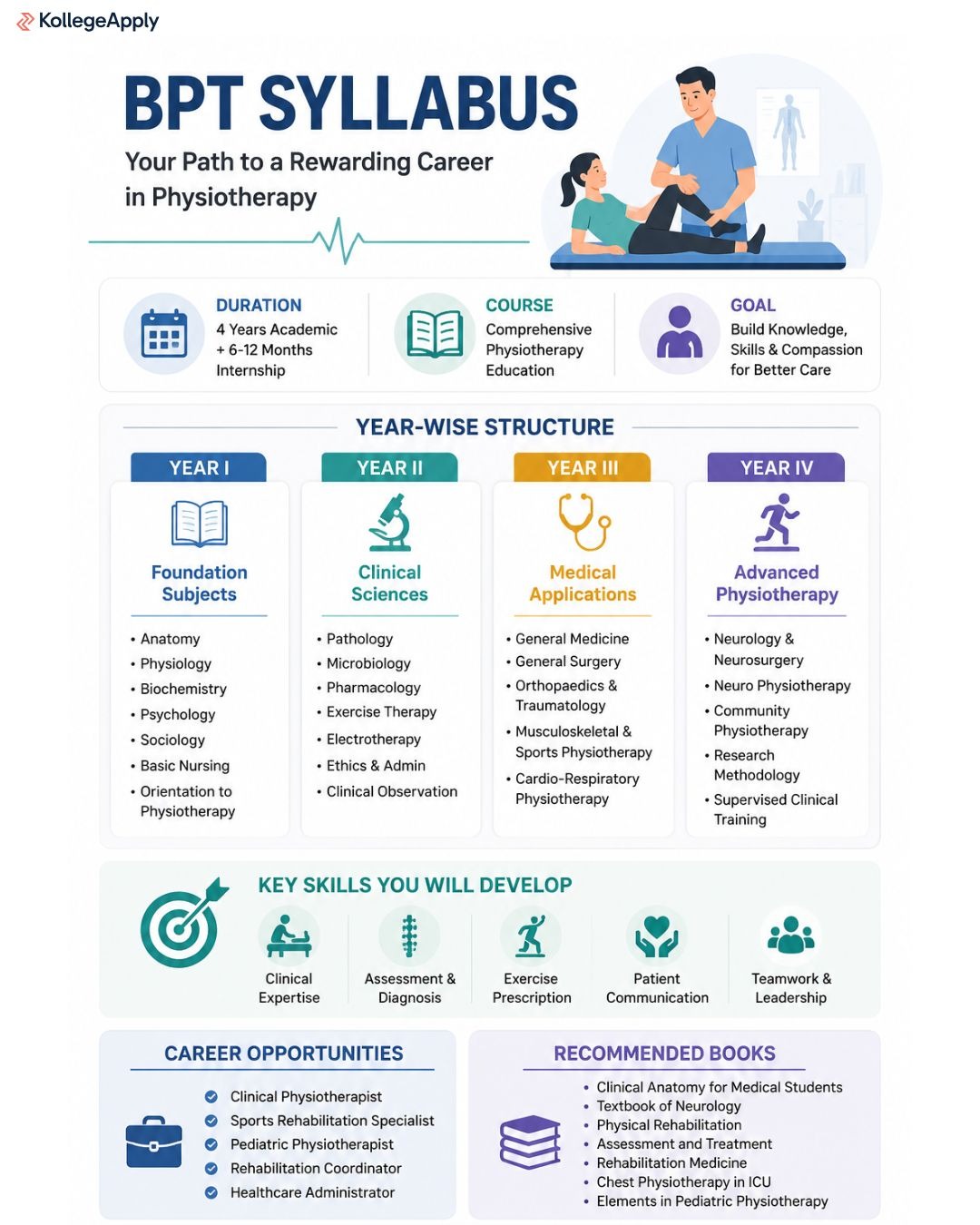
Table of Contents
What is the Semester-Wise Structure of BPT Syllabus?
During the physiotherapy 1st year subjects, students study several foundational topics that are important for developing a strong understanding of the physiotherapy field. The academic curriculum is spread across a period of 4 years and is divided into multiple semesters, each focusing on different aspects of physiotherapy education. Every semester consists of specialized subjects that help students gradually build the knowledge and practical skills required to become professional physiotherapists. Interested students can refer to theRajiv Gandhi University of Health Sciences syllabus given below to learn more about the curriculum structure and subjects covered in the program:
What Practical Learning is Included in the BPT Syllabus?
The BPT syllabus at Galgotias University includes practical learning through laboratory sessions, clinical observations, clinical education, and industrial training. Students gradually gain hands-on experience in core physiotherapy areas across the eight semesters. The practical components included in the Galgotias University BPT syllabus are:
Which Skills Can Students Develop Through the BPT Syllabus?
Students after studying physiotherapy subjects such as Pathology, Microbiology, Pharmacology, Clinical Orthopaedics, and Diagnostic Imaging, gain several industry-relevant skills that are essential for a successful career in the healthcare sector. The curriculum helps students develop both practical and soft skills through classroom learning, clinical training, and internship experiences. These skills enable graduates to take on job roles such as Pediatric Physiotherapist, Rehabilitation Coordinator, Clinical Physiotherapist, and many other healthcare professionals. To learn more about the skills acquired through the BPT syllabus, check out the pointers mentioned below:
- Students gain clinical expertise in subjects such as Anatomy, Biomechanics, Exercise Therapy, and Physiotherapy Assessment, helping them build a strong foundation in patient care and rehabilitation.
- The BPT course syllabus helps students develop an understanding of how to assess musculoskeletal disorders, apply pain management techniques, and address various physical dysfunctions effectively.
- The course also focuses on imparting knowledge of manual therapy techniques and exercise prescription, ensuring that candidates are prepared to work with a wide range of patients and medical conditions.
- Individuals studying the BPT syllabus also develop essential soft skills such as patient communication, interpersonal skills, empathy, and ethical practices, which are crucial in healthcare settings.
- Physiotherapy professionals often work as part of multidisciplinary teams in hospitals, rehabilitation centres, and clinics. The course helps students develop the organizational and management skills required to effectively manage resources, coordinate with healthcare professionals, and contribute to patient care after graduation.
Which Books Should Students Refer to for the BPT Syllabus?
Students preparing for the BPT syllabus should refer to standard academic books to develop a strong understanding of core physiotherapy subjects such as Anatomy, Physiology, Biomechanics, Exercise Therapy, and Electrotherapy. Some recommended books include Clinical Anatomy for Medical Students by Richard S. Snell and Physical Rehabilitation Assessment and Treatment by O’Sullivan Schmitz, which can help students strengthen their theoretical and practical knowledge. Students can check the table below for more recommended books and their respective authors:
BPT Syllabus FAQs
What is the first year syllabus of BPT course?
The 1st year BPT syllabus generally includes Anatomy, Physiology, Biochemistry, Psychology, Sociology, English, and Orientation to Physiotherapy.
What is the second year syllabus of BPT course?
The second-year BPT syllabus typically covers Pathology, Microbiology, Pharmacology, Exercise Therapy, Electrotherapy, Ethics, and Clinical Observation.
What are the major subjects included in the BPT syllabus?
The BPT subjects include Anatomy, Physiology, Pathology, Pharmacology, Neurology, Orthopaedics, Exercise Therapy, Electrotherapy, and Community Physiotherapy.
How many years does it take to complete the BPT course syllabus?
The BPT course syllabus is generally completed over 4 years of academic study followed by a 6-month to 1-year internship.
Does the physiotherapy syllabus include practical training?
Yes, the physiotherapy syllabus includes clinical postings, supervised rotatory training, practical sessions, and internships for hands-on learning.
Which specialization subjects are included in the BPT course syllabus?
The BPT course syllabus includes specialized subjects such as Neurological Physiotherapy, Sports Physiotherapy, Community Physiotherapy, and Cardio-Respiratory Physiotherapy.
What skills can students develop through the BPT syllabus?
The BPT syllabus helps students develop clinical assessment, rehabilitation planning, patient communication, exercise prescription, and teamwork skills.
Are internships included in the BPT syllabus?
Yes, the BPT syllabus includes a compulsory six month to one year internship that helps students gain real-world clinical exposure and practical healthcare experience.
Which books are recommended for studying BPT subjects?
Popular books for BPT subjects include Clinical Anatomy for Medical Students, Textbook of Neurology, and Physical Rehabilitation Assessment and Treatment.
What career opportunities are available after completing the BPT course?
After completing the BPT Course, graduates can work as Clinical Physiotherapists, Sports Rehabilitation Specialists, Pediatric Physiotherapists, and Healthcare Administrators.