The Master of Business Administration (MBA) in Operations Management is a two-year (four-semester) program designed to prepare students for industry-ready roles through a rigorous academic framework. The MBA in Operations Management syllabus covers key areas such as supply chain management, production planning, logistics, quality management, and project management, making it one of the most industry-focused management specializations.
In addition to classroom learning, students engage in seminars, internships, and project work, which strengthen practical exposure and improve career prospects. The MBA operations management syllabus blends theoretical knowledge with the development of essential soft skills, including communication, decision-making, and analytical thinking. Students also have the flexibility to choose electives such as Lean Six Sigma, ERP, Inventory Control, and Logistics, allowing them to tailor their learning to specific career goals.
MBA in Operations Management Course Structure
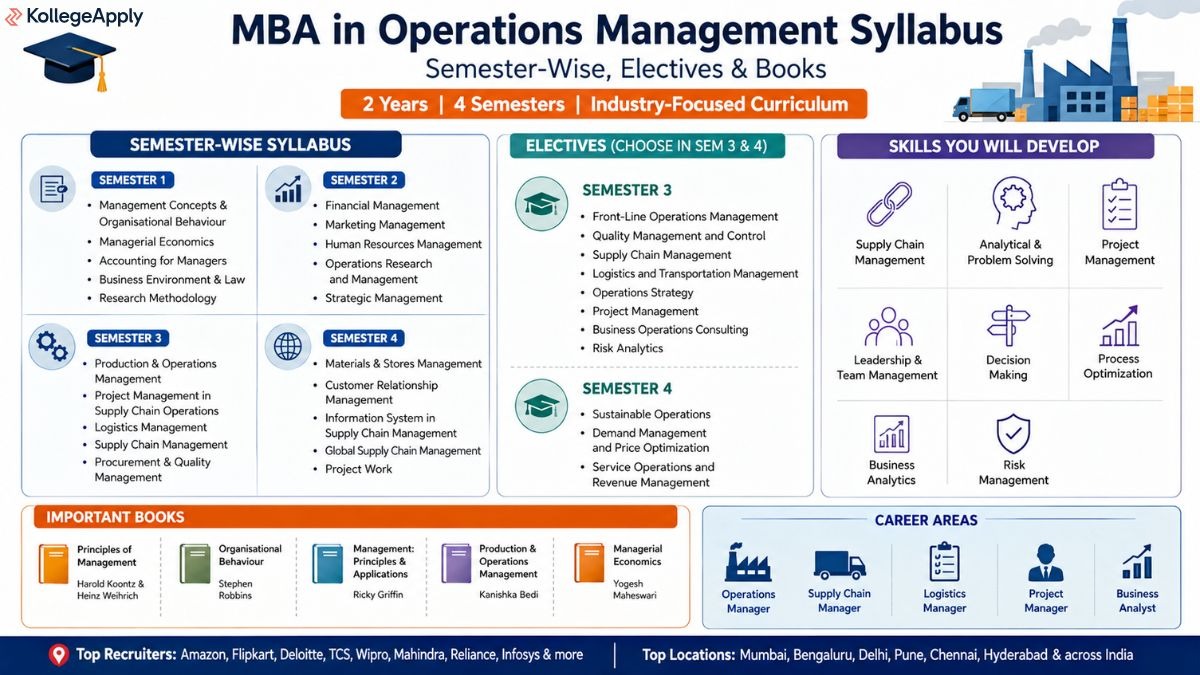
The MBA in Operations Management course structure is generally divided into four semesters, with the first year focusing on core management concepts and the second year covering specialised operations and supply chain subjects. The exact structure may vary by university.
Note: The MBA Operations Management course structure and subject combinations may differ across universities and institutes. Students should check the official curriculum of their chosen institution for the latest syllabus and programme requirements.
- What are the subjects in MBA Operations Management Syllabus?
- MBA in Operations Management Syllabus Semester-Wise
- Electives in MBA Operations Management Syllabus
- What are the Skills Developed Through MBA in Operations Management Syllabus?
- Tools and Technologies Covered in MBA Operations Management Syllabus
- MBA in Operations Management Syllabus Books
- MBA in Operations Management Syllabus FAQs
What are the subjects in MBA Operations Management Syllabus?
The MBA in Operations Management subjects are designed to help students develop expertise in business operations, production planning, supply chain management, logistics, and process optimization. The curriculum combines core management subjects with specialized operations courses to provide both strategic and practical knowledge required in modern businesses.
The MBA in operations subjects vary slightly across universities, but most institutions cover topics related to operations research, project management, procurement, quality control, and business analytics. These subjects equip students with the skills needed to improve organizational efficiency and manage complex operational challenges. Some of the Major MBA in Operations Management Subjects are:
Note: The MBA in operations management subjects may differ slightly depending on the university, specialization electives, and industry-oriented curriculum adopted by the institute.
MBA in Operations Management Syllabus Semester-Wise
The MBA in operations syllabus is divided into four semesters, with the first year focusing on core management subjects and the second year emphasizing specialized areas such as logistics, production, procurement, and supply chain management. The semester-wise curriculum helps students build a strong foundation in business operations and prepares them for managerial roles across industries. Students searching for the operation management MBA syllabus can refer to the semester-wise curriculum and elective structure given below. For reference, the Semester wise MBA in Operations Management syllabus followed at Pondicherry University:
Electives in MBA Operations Management Syllabus
The MBA in Operations Management syllabus includes a range of electives that allow students to specialize in key areas of operations and supply chain management. These subjects provide in-depth knowledge of logistics, quality management, project execution, and business consulting. Elective courses are generally offered in the third and fourth semesters, enabling students to develop industry-specific expertise and enhance their career prospects in operations and related domains.
Note: The elective subjects offered in an MBA in Operations Management program may vary from one institute to another. Students are advised to check the official syllabus of their chosen institute for the latest list of electives and course details.
What are the Skills Developed Through MBA in Operations Management Syllabus?
The MBA in Operations Management not only provides technical knowledge of supply chains and production systems but also helps students develop essential managerial and analytical skills required in modern businesses. Through case studies, projects, internships, and practical assignments, students learn how to improve business processes, manage resources efficiently, and make data-driven decisions.
The program equips graduates with a combination of leadership, problem-solving, and operational skills that are highly valued across industries such as manufacturing, logistics, e-commerce, consulting, and retail. Some of the key skills developed through an Operations Management MBA Syllabus are listed below:
- Supply Chain Management: Ability to manage procurement, inventory, transportation, and distribution processes efficiently.
- Analytical and Problem-Solving Skills: Capability to identify operational challenges and develop data-driven solutions.
- Project Management: Skills to plan, execute, and monitor projects while managing time, cost, and resources.
- Leadership and Team Management: Ability to lead teams, coordinate departments, and improve organizational performance.
- Decision-Making Skills: Competence in evaluating business situations and making strategic operational decisions.
- Process Optimization: Understanding of methods to improve productivity, reduce costs, and enhance efficiency.
- Business Analytics: Ability to interpret data and use analytical tools to support operational planning and forecasting.
- Risk Management: Ability to identify operational risks and develop strategies to ensure business continuity and supply chain resilience.
Tools and Technologies Covered in MBA Operations Management Syllabus
The MBA Operations Management syllabus may introduce students to various digital tools and technologies used to manage business operations, supply chains, inventory, logistics, and data-driven decision-making. The exact tools covered vary by university and programme structure. Common areas include:
- Enterprise Resource Planning (ERP) Systems: Used to integrate and manage functions such as procurement, inventory, production, finance, and supply chain operations.
- Supply Chain Management Platforms: Help organisations monitor procurement, logistics, inventory, transportation, and distribution activities.
- Business Analytics Tools: Used to analyse operational data, identify trends, support forecasting, and improve business decisions.
- Inventory Management Systems: Help track stock levels, manage replenishment, and optimise inventory costs.
- Data Visualisation Tools: Enable managers to present operational data through dashboards, charts, and reports for easier decision-making.
- Project Management Software: Supports project planning, task allocation, resource management, timelines, and performance tracking.
- Quality Management Tools: Help monitor processes, identify defects, analyse operational problems, and improve quality and efficiency.
The practical exposure to these tools can help students understand how technology, analytics, and automation are applied to improve operational efficiency and supply chain performance.
MBA in Operations Management Syllabus Books
Reference books play an important role in understanding the concepts covered in the MBA operations management syllabus. These books help students gain theoretical knowledge and practical insights into production, logistics, quality management, and strategic decision-making. The important books for MBA operation management are:
MBA in Operations Management Syllabus FAQs
What are the subjects in mba operations management?
The MBA in Operations Management syllabus includes subjects like supply chain, logistics, production, project management, quality management, and core business areas.
What is the scope of MBA in operations?
The MBA in Operations Management syllabus opens careers in logistics, supply chain, manufacturing, and consulting, with roles focused on efficiency and process optimization.
Is an MBA in operations management worth it?
Yes, the MBA Operations Management syllabus builds strong analytical and managerial skills, offering high demand roles in operations, logistics, and supply chain sectors.
Which digital tools and platforms are covered as part of the MBA in Operations Management syllabus?
The MBA in Operations Management syllabus may include tools like ERP systems, analytics software, and supply chain platforms to enhance practical learning.
Does the syllabus include work on real-time projects or industry-based assignments?
Yes, the MBA in Operations Management syllabus includes internships, seminars, and live projects to provide real-world exposure and industry experience.
What are the elective courses available in MBA in Operations Management syllabus?
The MBA in Operations Management syllabus offers electives like Lean Six Sigma, logistics, ERP, inventory control, and operations strategy for specialization.