There are several colleges in India, including both private and public institutions, that offer a three-year undergraduate program in the field of finance. Students interested in pursuing a course focused on areas such as financial statement analysis, investment analysis, portfolio management, accounting, and financial planning can consider enrolling in BBA in Finance colleges. Several reputed institutions, including NMIMS, KR Mangalam University, UPES, and many others, offer BBA in Finance programs at the undergraduate level.
To secure admission to colleges for BBA in finance, students are generally required to meet the prescribed eligibility criteria and may also need to qualify for entrance examinations such as CUET, NPAT, or other institute-specific tests. It is also important to consider factors such as course fees, as the cost of the program can vary significantly across institutions. Students should evaluate colleges based on their budget as well as other important aspects such as placement support, curriculum quality, faculty expertise, industry exposure, and overall academic reputation before making a final decision.
Table of Contents
Key Factors to Consider for BBA in Finance Colleges
It is crucial for students to assess all the relevant factors before finalizing a college for BBA Finance program. While meeting the eligibility criteria and qualifying the required entrance examinations are important for securing admission, there are several other aspects that should be carefully evaluated. Check out the key factors to consider before taking admission to BBA in Finance Colleges:
- Aspirants must aim for colleges with faculty members who possess both strong academic credentials and relevant industry experience.
- Students should target colleges with good NIRF rankings or those that have received recognized accreditations from reputed educational bodies.
- BBA aspirants should carefully assess placement records, average salary packages, and internship opportunities before selecting a college to pursue.
- It is important that colleges offer an updated BBA in Finance curriculum that aligns with current industry requirements and market trends.
- Candidates should look for colleges that focus not only on theoretical learning but also provide industry internships and practical exposure for a better understanding of real-world financial concepts.
- Students should also explore scholarship opportunities and financial assistance programs offered by institutions to reduce the overall cost of pursuing the program.
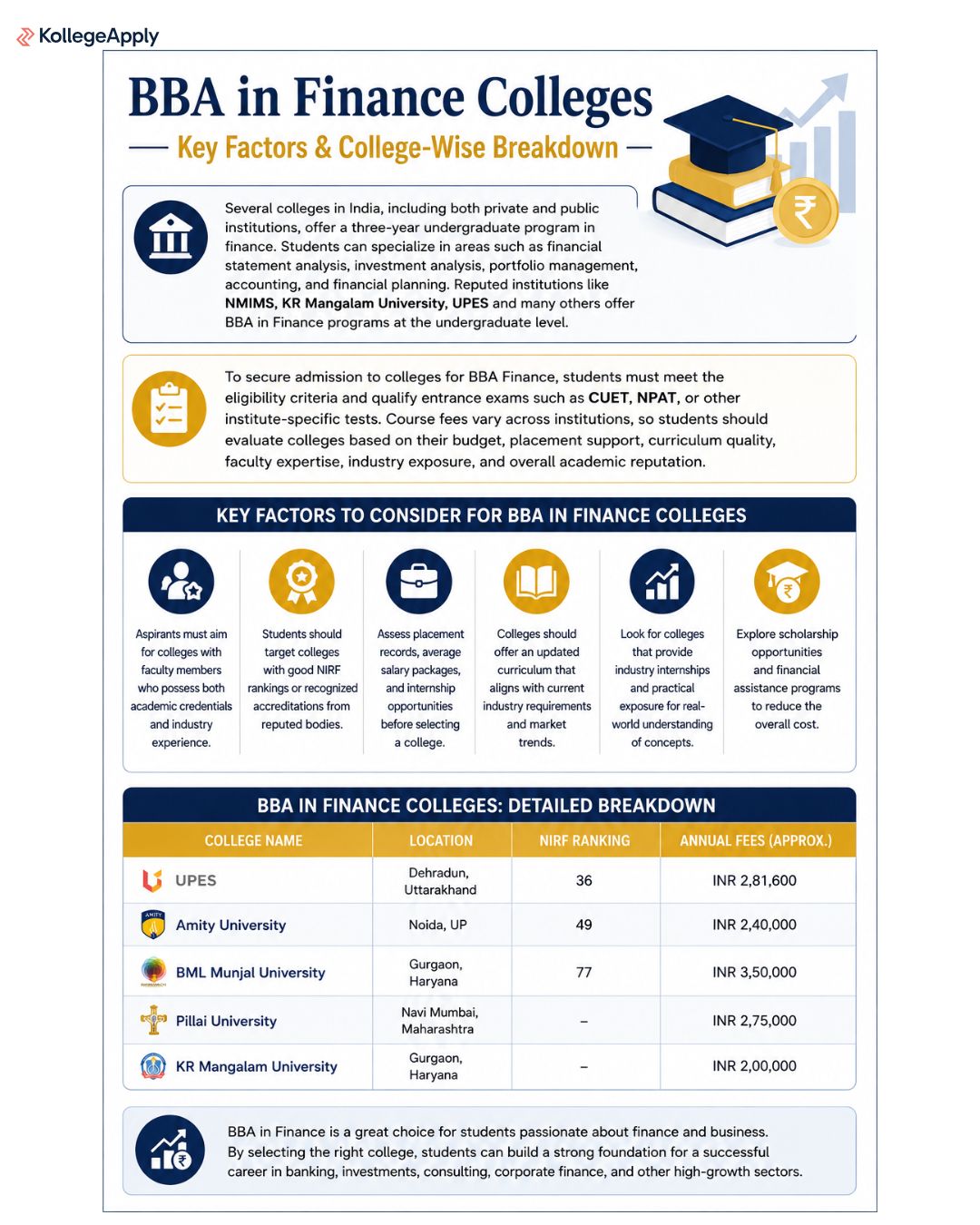
BBA in Finance Colleges: Detailed Breakdown
Several colleges in India offer BBA in Finance programs to interested students. These institutions admit candidates who successfully meet the prescribed eligibility criteria and admission requirements. Both public and private colleges offer the program, allowing students to choose an institute that best aligns with their academic goals and budget. Before applying, candidates should evaluate factors such as fees, location, placements, faculty expertise, and overall reputation of the college. The table below provides detailed information about some of the prominent BBA in Finance colleges in India:
BBA in Finance Fees FAQs
What are the eligibility criteria for admission to BBA in Finance colleges?
Most BBA in Finance colleges require the students to pass Class 12 with at least 50% aggregate marks from a recognized board.
What are the best BBA in Finance colleges in India?
Some popular BBA in Finance colleges include UPES, Amity University, NMIMS, KR Mangalam University, and BML Munjal University.
What is the average fee charged by BBA in Finance colleges?
The annual fee in BBA in Finance colleges generally ranges between INR 1 lakh to INR 4 lakh, depending on the institution.
Which entrance exams are accepted by BBA in Finance colleges?
Commonly accepted entrance exams include CUET, NPAT, and other institute-specific admission tests.
Do BBA in Finance colleges offer placement opportunities?
Yes, many BBA in Finance colleges provide placement assistance, internships, and industry exposure through corporate partnerships.
What subjects are taught in colleges for BBA Finance?
Common subjects include Financial Management, Investment Analysis, Accounting, Portfolio Management, and Financial Planning.
Are scholarships available in BBA in Finance colleges?
Yes, many BBA Finance colleges offer merit-based, need-based, and category-specific scholarships to eligible students.
What factors should students consider before selecting BBA in Finance colleges?
Students should evaluate placements, fees, faculty, curriculum, accreditations, infrastructure, and industry exposure before applying.
Is pursuing a degree from colleges for BBA Finance worth it?
Yes, the program provides strong foundational knowledge in finance and opens career opportunities in banking, investment, and financial services.