BSc IT Salary in India depends on several factors, including the job role, technical skills, experience, location, employer and area of specialisation. After completing a BSc IT degree, graduates can pursue entry-level opportunities in software development, web development, technical support, networking, database management and other IT-related fields.
The BSc IT scope and salary can expand as professionals gain practical experience and develop specialised skills. Areas such as software development, cloud computing, cybersecurity, data analytics and artificial intelligence offer different career opportunities, with salary potential varying according to the level of expertise and job responsibilities. Internships, technical projects, certifications and hands-on experience can also help graduates improve their employability and progress towards more specialised roles.
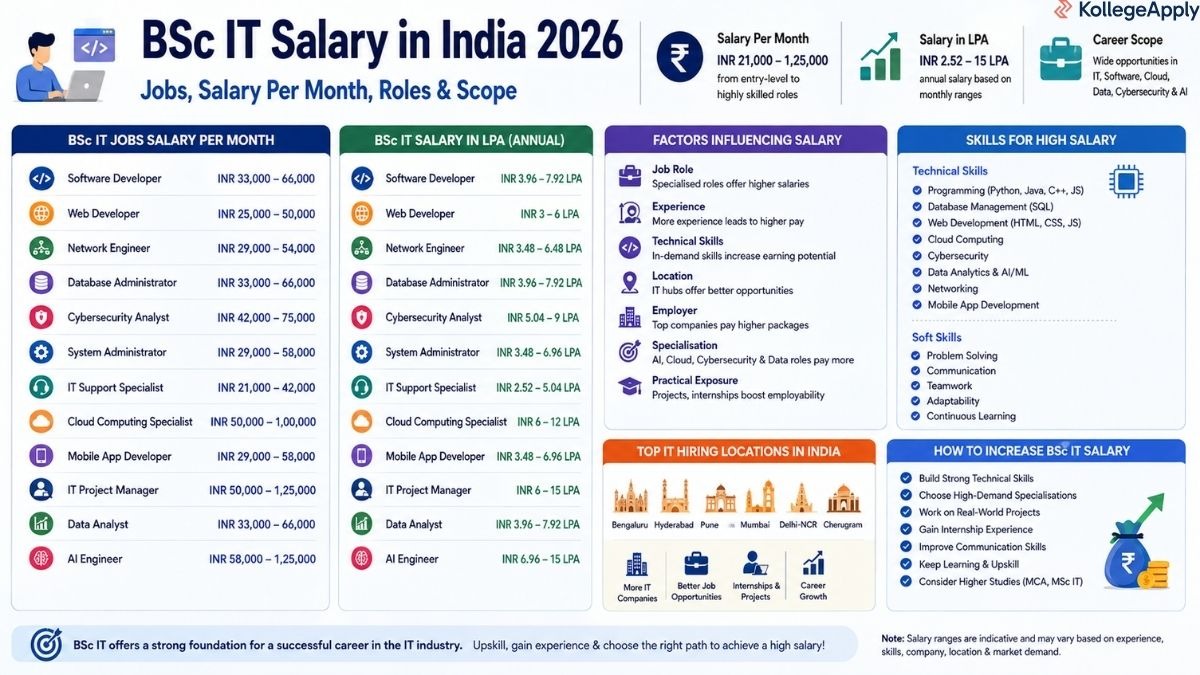
Table of Contents
What are the factors influencing BSc IT Salary?
Several factors determine how much a BSc IT graduate can earn after completing the degree. Entry-level candidates may start with comparatively lower packages, while professionals with specialised technical skills and relevant experience can access higher-paying roles. The major factors affecting BSc in IT salary include:
- Job Role: Technical and specialised roles such as AI Engineer, Cloud Computing Specialist and IT Project Manager generally have higher salary ranges.
- Experience: Salary potential generally increases as professionals gain practical experience and take on more complex responsibilities.
- Technical Skills: Programming, cloud computing, cybersecurity, databases and data analytics can strengthen career opportunities.
- Location: Salaries can differ depending on the city, technology industry presence and demand for IT professionals.
- Employer: Large IT companies, technology firms and multinational organisations may offer different compensation packages.
- Specialisation: Professionals working in emerging areas such as AI, cloud and cybersecurity may access specialised career opportunities.
- Practical Exposure: Internships, projects and hands-on technical experience can help graduates demonstrate job-ready skills.
Detailed Breakdown of BSc IT Salary
The BSc IT Salary differs considerably across career paths. Graduates can work in software development, networking, databases, cybersecurity, cloud computing, data analytics and project management. The following sections explain BSc IT jobs salary per month based on experience, job role and location.
BSc IT Salary Based on Experience
Experience is an important factor in determining BSc IT jobs salary. Fresh graduates usually begin their careers in junior or entry-level positions, while professionals with experience can progress into specialised and managerial roles.
The salary ranges below are based on the job-role salary figures provided for this article. Since the available source data is organised by job role rather than experience level, separate experience-wise salary figures are not assigned to avoid presenting unsupported numbers.
Students should therefore evaluate both the BSc IT salary per month and the skills required for their target role rather than relying only on an average figure.
BSc IT Salary Based on Job Roles
A BSc IT degree can lead to career opportunities across different areas of information technology. However, the salary associated with each role can vary significantly. Entry-level and support-oriented positions may offer comparatively lower starting salaries, while specialised technical roles can provide greater earning potential as professionals gain experience and develop relevant expertise.
It is also important to note that not every role listed below is necessarily an immediate entry-level position after BSc IT. Roles such as IT Project Manager and Artificial Intelligence Engineer may require additional technical skills, relevant work experience or specialised training. The salary figures below provide an indicative comparison of earning potential across different IT career paths.
BSc IT Jobs Salary Per Month
The BSc IT jobs salary per month varies significantly across different career roles. Entry-level and support-oriented positions generally have lower salary ranges, while specialised areas such as cloud computing, artificial intelligence and project management can offer higher earning potential. The table below shows the monthly salary range for common BSc IT jobs.
Salary Note: The salary figures below are indicative ranges and may vary based on experience, location, employer, technical skills and job responsibilities. Actual salaries may differ across companies and career levels.
BSc IT Salary in LPA
The BSc IT salary in LPA provides an annual view of the earning potential across different career roles. This helps students compare the annual salary potential of different BSc IT jobs.
Note: Actual compensation may vary by employer, experience, skills and employment conditions.
BSc IT Salary Based on Location
Location can influence BSc IT Salary because technology hubs generally have a larger concentration of IT companies, startups, multinational organisations and technology-related jobs. Candidates should consider both salary opportunities and the cost of living when comparing locations.
Major technology centres such as Bengaluru, Hyderabad, Pune, Chennai, Mumbai, Delhi-NCR and Gurugram offer diverse opportunities for IT graduates. However, the exact salary for a BSc IT graduate depends more directly on the job role, employer, experience and skills. Students should compare the following factors when choosing a location:
- Availability of IT companies and technology firms
- Demand for specific technical skills
- Number of entry-level BSc IT jobs
- Internship and project opportunities
- Career progression opportunities
- Cost of accommodation and transportation
- Presence of startups and multinational companies
BSc IT Jobs and Career Scope
The BSc IT scope and salary is not limited to a single career path. Graduates can enter software development, networking, database management, cybersecurity, cloud computing, data analytics and technical support.
The growth path can also change with additional certifications, projects, internships, programming skills and postgraduate education. Graduates interested in advanced technical careers can consider areas such as artificial intelligence, cloud computing, cybersecurity and data analytics. Some popular BSc IT jobs include:
- Software Developer
- Web Developer
- Network Engineer
- Database Administrator
- Cybersecurity Analyst
- System Administrator
- IT Support Specialist
- Cloud Computing Specialist
- Mobile App Developer
- IT Project Manager
- Data Analyst
- Artificial Intelligence Engineer
Skills Required for High BSc IT Salary
Technical expertise plays an important role in improving career opportunities after BSc IT. Students who build practical skills alongside their degree can target specialised roles instead of relying only on basic IT support positions. Strong communication, problem-solving and project experience can further strengthen employability.
Technical Skills
- Programming: Python, Java, JavaScript, C++ and other relevant programming languages.
- Database Management: SQL, database design and database administration.
- Web Development: HTML, CSS, JavaScript and modern web development frameworks.
- Cloud Computing: Understanding cloud platforms, deployment and cloud infrastructure.
- Cybersecurity: Network security, threat detection and basic security practices.
- Data Analytics: Data handling, SQL, analytical tools and data visualisation.
- Artificial Intelligence: Machine learning fundamentals, Python and AI concepts.
- Networking: Network configuration, troubleshooting and security fundamentals.
- Mobile Development: Mobile application development and relevant programming frameworks.
Soft Skills
- Problem-solving
- Analytical thinking
- Communication
- Teamwork
- Time management
- Adaptability
- Project management
- Continuous learning
How to Increase BSc IT Salary?
Students can improve their earning potential by combining the BSc IT degree with practical technical skills and industry exposure. Employers often look for candidates who can demonstrate what they know through projects, internships, certifications and practical problem-solving. Some useful strategies include:
- Build Technical Skills: Strengthen programming, databases, networking or other skills relevant to your target role.
- Choose a Specialisation: Consider cybersecurity, cloud computing, AI, data analytics or software development.
- Complete Projects: Build practical projects that demonstrate your technical abilities.
- Gain Internship Experience: Internships can provide exposure to real workplace environments.
- Develop Communication Skills: Strong communication can support teamwork and career progression.
- Learn Continuously: Technology changes rapidly, so regularly updating your skills can improve long-term career opportunities.
- Consider Higher Studies: MCA, MSc IT and relevant postgraduate programmes can provide further academic and career pathways.
BSc IT Salary FAQs
What is the average BSc IT Salary in India?
BSc IT Salary ranges from about INR 21,000 to INR 1,25,000 monthly in the salary data used, depending on role, skills and experience.
What is BSc IT jobs salary per month?
BSc IT jobs salary per month ranges from INR 21,000 to INR 1,25,000 in the provided data, depending on the job role.
What is BSc in IT salary for freshers?
BSc in IT salary for freshers depends on the role, employer and skills. Entry-level candidates can target software, support, networking and web development jobs.
Is BSc IT has scope in future?
Yes, BSc IT has scope in software development, cloud computing, cybersecurity, AI, networking and data analytics, with skills influencing career growth.
What are the best BSc IT jobs?
Popular BSc IT jobs include Software Developer, Cloud Specialist, Cybersecurity Analyst, Data Analyst and AI Engineer, depending on skills and career interests.
Which BSc IT job has the highest salary?
In the provided salary data, IT Project Manager and Artificial Intelligence Engineer have the highest upper range of about INR 15 LPA.
What is the BSc IT scope and salary?
BSc IT scope and salary covers careers in software, cloud, cybersecurity, networking, databases, data and AI, with pay varying by role and experience.
Can BSc IT graduates get jobs in IT companies?
Yes, BSc IT graduates can apply for software, networking, database, support, cybersecurity, cloud and data-related BSc IT jobs.
Which skills increase BSc IT Salary?
Programming, cloud computing, cybersecurity, AI, data analytics, databases and practical project experience can improve BSc IT Salary opportunities.
What is the highest BSc in IT salary?
The highest figure in the provided BSc in IT salary data is INR 1,25,000 per month, equivalent to approximately INR 15 LPA.