DDVL vs MD Dermatology is an important comparison for MBBS graduates planning a career in dermatology. DDVL (Diploma in Dermatology, Venereology and Leprosy) is a postgraduate diploma, while MD Dermatology is a postgraduate medical degree. They differ in course duration, training depth, academic opportunities and career progression. Therefore, DDVL is not equivalent to MD, although both provide postgraduate training in dermatology-related areas.
For candidates deciding between the two, MD Dermatology generally offers broader clinical, academic and research opportunities, while DDVL provides a focused postgraduate diploma pathway in Dermatology, Venereology and Leprosy. This article covers the key DDVL vs MD differences, including eligibility, duration, curriculum, career scope, salary, higher-study options and recognition. It also explains whether DDVL is equivalent to MD and what the highest degree in dermatology is, helping candidates choose the qualification according to their long-term career goals.
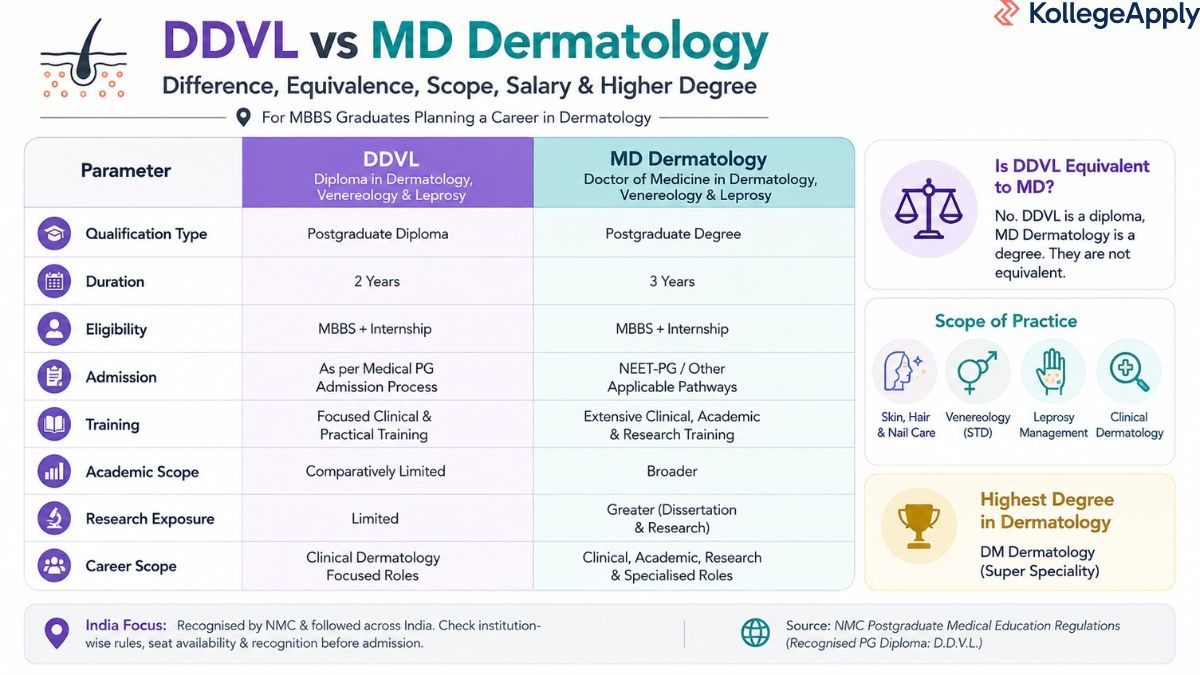
DDVL vs MD: Quick Comparison
DDVL and MD in Dermatology, Venereology and Leprosy are both postgraduate qualifications in dermatology, but they are not the same qualification. DDVL is a postgraduate diploma, while MD Dermatology is a postgraduate degree. The two differ in course structure, duration, training depth, academic opportunities and career progression. The National Medical Commission (NMC) lists DDVL among recognised postgraduate diploma qualifications, while MD Dermatology is a three-year postgraduate degree programme.
Note: Admission rules, seat availability and recognition status should always be checked for the specific institution and academic session.
What is DDVL?
DDVL stands for Diploma in Dermatology, Venereology and Leprosy. It is a postgraduate medical diploma focused on the diagnosis and management of diseases affecting the skin, hair and nails, along with sexually transmitted diseases and leprosy. The qualification is intended for medical graduates who want postgraduate training in dermatology through a diploma route.
DDVL is different from MD Dermatology because it is a diploma rather than a degree. The NMC's Postgraduate Medical Education Regulations list Dermatology, Venereology and Leprosy (D.D.V.L.) among recognised postgraduate diploma qualifications.
DDVL Eligibility
Specific admission requirements can vary according to the applicable regulations and institution. Candidates generally need:
- An MBBS degree from a recognised medical institution.
- Completion of the required internship.
- Registration with the appropriate medical regulatory authority.
- Qualification in the applicable postgraduate medical admission process.
What is MD Dermatology?
MD Dermatology is a postgraduate medical degree in Dermatology, Venereology and Leprosy. It provides comprehensive training in dermatological diseases, venereology, leprosy, diagnostic procedures and therapeutic management. The NMC's competency-based curriculum specifies three years of postgraduate training in Dermatology, Venereology and Leprosy. The curriculum includes advanced clinical knowledge, diagnostic and therapeutic procedures, recent developments and practical skills. The programme also covers areas such as dermatopathology, paediatric dermatology, cosmetic dermatology, sexually transmitted infections, leprosy and procedural dermatology.
MD Dermatology Eligibility
Candidates seeking admission to MD Dermatology generally need to meet the following requirements:
- An MBBS degree from a medical institution recognised by the appropriate medical regulatory authority.
- Completion of the compulsory rotating internship within the prescribed deadline.
- Registration with the appropriate medical regulatory authority.
- Qualification in the applicable postgraduate medical entrance examination, such as NEET-PG or another authorised admission process, as applicable.
- Candidates must also fulfil the eligibility and admission requirements specified for the particular counselling process and institution.
Is DDVL Equivalent to MD?
No, DDVL is not equivalent to MD Dermatology as a qualification. DDVL is a recognised postgraduate diploma, whereas MD Dermatology is a postgraduate degree. They are different qualifications with differences in duration, training structure and academic scope. The NMC separately identifies D.D.V.L. under recognised postgraduate diploma qualifications and provides a three-year competency-based curriculum for MD Dermatology, Venereology and Leprosy.
However, DDVL is a specialised postgraduate qualification in dermatology and should not be confused with a short-term certificate course. Whether a DDVL holder is eligible for a particular job, further course or institutional position depends on the applicable rules.
DDVL vs MD: Which is Better?
There is no single answer because the better option depends on the candidate's career objective. If the primary goal is to obtain focused postgraduate training in dermatology through a diploma route, DDVL may be considered. If the goal is broader postgraduate training, academic progression, research exposure and wider career opportunities, MD Dermatology is generally the stronger qualification.
Candidates should also consider course availability, admission competition, training quality, institutional facilities and their long-term career plans before choosing between DDVL and MD.
DDVL vs MD: Career Scope
Both DDVL and MD Dermatology can lead to dermatology-focused clinical careers, subject to applicable registration, institutional and regulatory requirements. Candidates may work in hospitals, dermatology clinics, healthcare organisations and private practice settings where their qualification is accepted.
MD Dermatology generally provides a wider range of opportunities because of its degree status and more extensive postgraduate training. The NMC curriculum includes clinical management, diagnostic procedures and specialised competencies across dermatology, venereology and leprosy.
Career Options After DDVL
- Dermatology-focused clinical roles
- Hospital-based dermatology services
- Skin and aesthetic clinics
- Private clinical practice, subject to applicable regulations
- Healthcare organisations
- Further medical education where eligible
Career Options After MD Dermatology
- Dermatologist
- Consultant Dermatologist
- Academic/teaching roles
- Clinical researcher
- Hospital specialist
- Cosmetic and aesthetic dermatology
- Private practice
- Subspecialty-focused dermatology practice
DDVL vs MD: Salary
The DDVL vs MD salary difference depends on experience, location, employer, clinical responsibilities and practice setting. DDVL-qualified doctors may earn around INR 7.5 LPA in dermatology-focused clinical roles, while MD Dermatology graduates may earn around INR 8–15 LPA in entry-level dermatologist roles. Experienced MD specialists and private practitioners may earn substantially more.
Note: These are indicative market ranges, not guaranteed salaries. Actual earnings can vary considerably based on city, employer, experience, patient volume, procedures, consultation fees and private-practice setup. MD Dermatology generally offers broader specialist, academic and consultant-level opportunities than DDVL.
What is the Highest Degree in Dermatology?
For the standard postgraduate pathway in India, MD in Dermatology, Venereology and Leprosy is a postgraduate degree, while higher academic qualifications can include DM or other recognised advanced training pathways where available and relevant. Candidates may also pursue fellowships or focused training in areas such as cosmetic dermatology, dermatopathology or other specialised fields. Therefore, if the question is specifically “Is DDVL the highest degree in dermatology?”, the answer is no. DDVL is a postgraduate diploma, while MD Dermatology is a postgraduate degree.
Can You Do MD After DDVL?
Whether a candidate with DDVL can enter an MD programme depends on the current admission regulations and eligibility criteria applicable to the programme. Candidates should not assume that completing DDVL automatically provides admission to MD Dermatology or shortens the MD duration. For candidates planning a long-term academic career, it is important to check the current postgraduate medical admission rules before selecting DDVL as the initial pathway.
DDVL vs MD FAQs
What is the difference between DDVL and MD Dermatology?
DDVL is a postgraduate diploma, while MD Dermatology is a postgraduate medical degree with broader clinical, academic and research training.
Is DDVL equivalent to MD?
No, DDVL and MD Dermatology are different postgraduate qualifications with differences in duration, training structure and academic scope.
What is DDVL full form?
DDVL stands for Diploma in Dermatology, Venereology and Leprosy.
Is DDVL a postgraduate course?
Yes, DDVL is a postgraduate medical diploma in Dermatology, Venereology and Leprosy.
Which is better, DDVL or MD Dermatology?
MD Dermatology generally offers broader clinical, academic, research and career opportunities than DDVL.
What is the highest degree in dermatology?
MD Dermatology is a major postgraduate degree in dermatology. Further specialised training may also be available.
How long is MD Dermatology?
MD Dermatology is a three-year postgraduate medical degree programme.
Can MBBS graduates pursue DDVL?
Yes, MBBS graduates can pursue DDVL subject to applicable eligibility and postgraduate medical admission requirements.
Can I do MD after DDVL?
It depends on current admission rules and eligibility criteria. Completing DDVL does not automatically guarantee admission to MD Dermatology.
Which is better for academic careers, DDVL or MD?
MD Dermatology is generally better suited for candidates seeking wider teaching, research and academic opportunities.