The DMRD syllabus is designed to provide postgraduate medical training in radiodiagnosis through a combination of theoretical learning, clinical exposure and supervised practical training. The curriculum covers conventional radiology as well as modern imaging techniques such as ultrasonography, Computed Tomography (CT) and Magnetic Resonance Imaging (MRI). It also introduces students to radiation safety, contrast media, emergency radiology and image-guided procedures.
The DMRD Radiology syllabus is not structured like a typical undergraduate course with a fixed list of semester-end subjects. The NMC curriculum is competency-based and focuses on developing the ability to conduct and interpret diagnostic and interventional imaging studies. Training covers major radiology subspecialties including chest, neuro, gastrointestinal, genitourinary, cardiovascular, musculoskeletal, paediatric, emergency and interventional radiology, along with mammography.
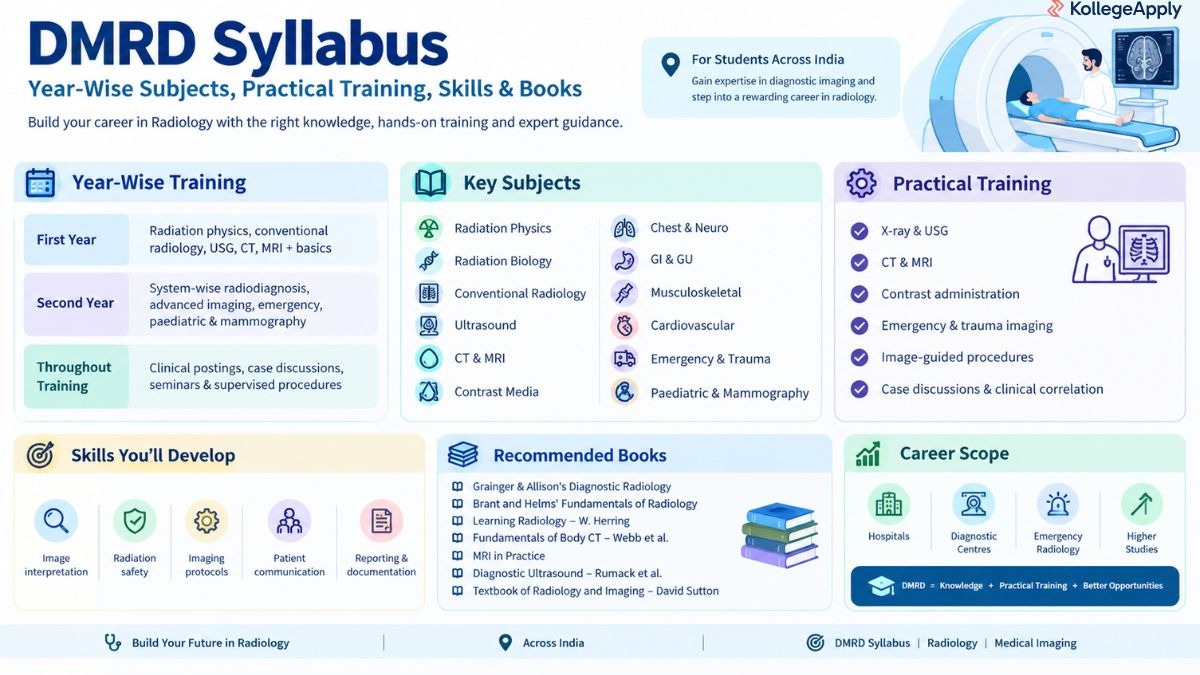
Table of Contents
DMRD Syllabus Year-Wise
The DMRD course syllabus is generally covered through progressive academic and clinical training during the two-year postgraduate diploma. Students build their understanding of imaging principles before progressing towards system-wise radiodiagnosis, advanced imaging and supervised clinical work. The exact posting schedule may differ across institutions.
The NMC states that the DMRD programme should train students in both conventional and modern imaging techniques and make them competent in ultrasound, CT and MRI along with other areas of radiodiagnosis. The following year-wise structure is a simplified overview of how DMRD training may progress. Exact sequencing of topics, postings and academic activities can vary by institution.
DMRD Subjects
The DMRD subjects combine the scientific principles of imaging with clinical radiodiagnosis. Rather than studying each imaging modality in isolation, students learn to select appropriate investigations, understand imaging findings and correlate them with the patient's clinical presentation. The below given areas correspond to the major competencies and subspecialties identified in the NMC Diploma in Radiodiagnosis curriculum.
Electives in DMRD Syllabus
DMRD is primarily a structured postgraduate clinical training programme, so it is not generally presented as an elective-based course with a nationally fixed list of optional subjects. However, individual institutions may provide additional exposure to specific radiology subspecialties through departmental postings, case discussions or focused training.
The following should be considered areas of additional training rather than compulsory electives, since the availability and structure of such postings can vary between institutions.
Practical Training in DMRD Syllabus
Practical training is a core component of the DMRD syllabus. The programme is intended to develop clinical competence through supervised exposure to imaging investigations, interpretation of radiological findings, case discussions and relevant procedures. The NMC's postgraduate diploma regulations also emphasise in-service clinical training and practical training in the concerned speciality. The level of independent responsibility increases as trainees gain experience and demonstrate competence. During practical training, students may be involved in:
- Reviewing and interpreting X-ray examinations
- Participating in ultrasound examinations
- Interpreting CT scans under supervision
- Learning MRI protocols and image interpretation
- Understanding contrast-media administration
- Assessing emergency and trauma imaging
- Observing and assisting with image-guided procedures
- Presenting clinical cases
- Participating in departmental discussions
- Correlating radiological findings with clinical information
Clinical Postings and Academic Activities in DMRD Syllabus
DMRD training is not limited to classroom teaching. Postgraduate students are expected to participate in academic and clinical activities that help them develop diagnostic reasoning and professional skills.
The NMC postgraduate framework emphasises seminars, journal clubs, group discussions, clinical meetings and practical training as components of postgraduate diploma education. Common activities may include:
- Case presentations
- Seminars
- Journal clubs
- Clinical meetings
- Image-based discussions
- Radiology demonstrations
- Departmental teaching
- Interdepartmental case discussions
- Continuing medical education activities
- Research-related learning
Assessment Pattern for DMRD Syllabus
DMRD assessment evaluates theoretical knowledge as well as clinical and practical competence. Under the NMC postgraduate diploma framework, the diploma examination includes theory, clinical and oral components. The university or institution may specify the detailed examination schedule and internal assessment process.
Note: The university or institution may specify the detailed examination schedule and internal assessment process
Skills Developed Through DMRD Syllabus
The DMRD syllabus develops diagnostic, clinical, technical and professional skills required for radiology practice. Students learn not only to recognise imaging abnormalities but also to select appropriate investigations and communicate relevant findings in a clinical setting.
The NMC specifically expects DMRD graduates to be able to conduct and interpret routine and special imaging investigations and provide radiological services in acute emergency and trauma settings.
Key skills developed through DMRD include:
- X-ray interpretation
- Ultrasound interpretation
- CT image interpretation
- MRI image interpretation
- Selection of appropriate imaging modalities
- Understanding of imaging protocols
- Radiation protection
- Safe use of contrast media
- Recognition of common radiological abnormalities
- Emergency and trauma imaging
- Clinical-radiological correlation
- Basic image-guided procedural skills
- Patient communication
- Documentation and reporting
- Understanding of medical ethics and medico-legal issues
- Research and evidence-based learning
Books for DMRD Syllabus
Students preparing for DMRD can use standard radiology textbooks along with institutional teaching material, case discussions, current guidelines and recent medical literature. Books should be selected according to the topics covered by the candidate's university and department.
Students should not rely solely on textbooks for practical preparation. Regular image interpretation, clinical case discussions and supervised departmental training are important for developing the competencies expected from DMRD trainees.
FAQs on DMRD Syllabus
What is covered in the DMRD syllabus?
The DMRD syllabus covers radiation physics, X-ray, ultrasound, CT, MRI, contrast media and system-wise diagnostic imaging.
Is DMRD a radiology course?
Yes, DMRD is a postgraduate radiodiagnosis course focused on conventional and advanced medical imaging and clinical interpretation.
Does DMRD syllabus include MRI?
Yes, the DMRD Radiology curriculum includes MRI principles, applications and interpretation of common pathological conditions.
Does DMRD syllabus include ultrasound?
Yes, ultrasound is an important part of DMRD training, along with its clinical applications and limitations.
What are the main DMRD subjects?
Major DMRD subjects include radiation physics, conventional radiology, ultrasound, CT, MRI and system-wise radiodiagnosis.
Is practical training included in DMRD?
Yes, DMRD includes clinical and practical training through radiology postings, case interpretation and supervised imaging procedures.
Does DMRD cover interventional radiology?
Yes, interventional radiology is included as a training area, with procedures performed or observed according to institutional supervision.
Which books are best for DMRD Radiology?
Standard references include Grainger & Allison's Diagnostic Radiology, Sutton's Radiology and Brant and Helms' Fundamentals of Diagnostic Radiology.
What is the career scope after DMRD?
DMRD can lead to opportunities in hospitals, diagnostic centres, imaging services, emergency radiology and further radiology-related training.
Is DMRD syllabus the same as DRIT syllabus?
No. DMRD is postgraduate medical radiodiagnosis training, while DRIT focuses on radiology and imaging technology at technician level.