The PhD in Radiology salary in India depends on the candidate's research specialisation, qualifications, experience and employer. Graduates may pursue careers in medical imaging research, radiology technology, clinical research, academic teaching and image-processing development. Unlike clinical radiologists, who generally require recognised medical qualifications and appropriate specialist training, PhD holders may work in research and technology-focused positions with different salary structures.
The salary after a PhD in Radiology is not fixed because universities, hospitals, research institutes and medical technology companies offer different pay packages. Research fellows generally receive stipends or fellowships, while experienced researchers, faculty members and industry specialists may earn higher salaries. Candidates should compare the advertised pay scale, employment type and eligibility requirements rather than treating a doctorate as a guarantee of a particular salary.
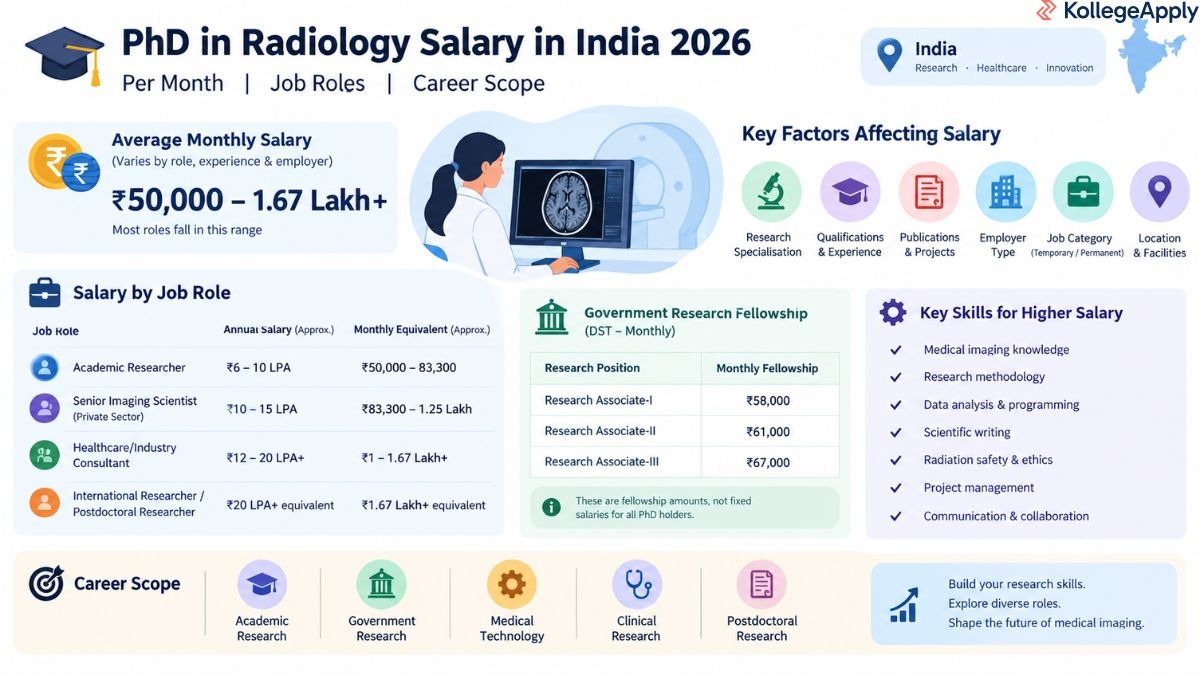
Factors Influencing PhD in Radiology Salary
The salary for PhD in Radiology graduates depends on the type of doctoral research, the employer's pay structure and the candidate's professional background. A doctorate in Medical Imaging Technology may lead to technology or research positions, whereas a doctorate following clinical radiology training may support specialised academic and medical research careers. Official recruitment notices are useful for understanding actual pay because they specify the post, required qualifications and monthly remuneration. The main factors influencing the PhD in Radiology salary in India include:
- Research specialisation: Medical imaging, radiodiagnosis, radiation sciences and image processing lead to different career pathways.
- Previous qualifications: An MD/DNB, relevant master's degree, technical expertise or clinical experience may affect eligibility for specific posts.
- Experience and publications: Research output, project experience, patents and publications can strengthen applications for senior roles.
- Employer type: Government research institutes, universities, hospitals and medical technology companies follow different pay structures.
- Employment category: A temporary project fellowship, permanent scientific post and university faculty appointment may offer different remuneration and benefits.
- Location: Institutional pay scales, applicable house rent allowance (HRA), research facilities and local employment opportunities can affect total compensation.
Detailed Breakdown of PhD in Radiology Salary
There is no single government-prescribed salary for everyone holding a PhD in Radiology. Government-funded research fellowships and project appointments provide useful reference points, while academic and industry salaries depend on the advertised position. For example, the Department of Science and Technology's published fellowship schedule specifies monthly research associate payments of INR 58,000–67,000, subject to the applicable scheme and eligibility conditions.
The following sections compare pay by experience, job role and location. Figures identified as official fellowship or recruitment amounts are distinct from broader career estimates; actual offers should always be checked against the relevant notification.
PhD in Radiology Salary Based on Experience
The PhD in Radiology salary may increase as candidates gain research experience, publish scientific papers, develop specialised imaging skills and take responsibility for funded projects. However, there is no uniform experience-wise salary structure for doctorate holders in radiology. Early-career researchers may begin with project-based research appointments or postdoctoral fellowships, while experienced professionals can pursue senior research, academic and medical imaging technology positions, subject to the relevant eligibility criteria.
Salary progression depends on the position, funding source, employer and previous qualifications rather than years of experience alone. For example, the Department of Science and Technology specifies monthly fellowship rates of INR 58,000 for Research Associate-I, INR 61,000 for Research Associate-II and INR 67,000 for Research Associate-III. These amounts apply to the respective fellowship categories and should not be interpreted as salary bands for specific experience levels. Candidates should consult official recruitment notices to compare remuneration and eligibility requirements.
PhD in Radiology Salary Based on Job Roles
The job role is an important factor in determining the salary after a PhD in Radiology. Candidates may work in medical research, academic institutions, imaging technology development or clinical research projects. The following examples use published government research remuneration and distinguish it from permanent employment pay.
Other Potential Roles:
The below given positions have different eligibility requirements. For example, a research or technology doctorate does not independently qualify someone to practise as a clinical radiologist.
- Medical Imaging Researcher: Develops or evaluates imaging methods, acquisition techniques and diagnostic technologies.
- Radiology Research Scientist: Conducts studies involving diagnostic imaging, radiation sciences or image analysis.
- Clinical Research Specialist: Supports clinical studies, research protocols, data analysis and regulatory documentation.
- University Faculty Member: Teaches relevant subjects and supervises research, subject to the institution's qualification and recruitment requirements.
- Medical Imaging Technology Specialist: Works on imaging equipment, image processing, technical validation or product development.
Government Research Fellowship Salary After PhD in Radiology
Candidates pursuing research careers after a PhD in Radiology may apply for eligible research associate positions funded by government departments and research institutions. The Department of Science and Technology (DST) specifies fellowship amounts according to the research associate category. These rates provide a useful reference for research-related earnings, but eligibility and appointment conditions vary by scheme and institution.
Note: Above given fellowship rates for the relevant categories are not fixed salaries for all PhD in Radiology graduates.
Skills Required for High PhD in Radiology Salary
A PhD can help candidates develop advanced research expertise, but higher-paying positions often require evidence of practical skills, publications and the ability to contribute to funded projects. The most relevant skills depend on whether the candidate intends to pursue clinical research, medical imaging technology, academic teaching or industry-based research. Important skills include:
- Medical imaging knowledge: Understanding imaging principles, image acquisition, image quality and relevant research methods.
- Research methodology: Designing studies, evaluating evidence, preparing protocols and interpreting results.
- Data analysis and programming: Using suitable statistical tools and programming languages for image analysis, research datasets or machine learning.
- Scientific writing: Publishing research papers, preparing reports and communicating findings clearly.
- Radiation safety and research ethics: Following applicable safety standards, research ethics requirements and data-protection practices.
- Project management: Coordinating research activities, managing timelines and contributing to grant proposals.
- Communication and collaboration: Working effectively with clinicians, engineers, statisticians and research teams.
Candidates seeking medical imaging technology roles may benefit from image processing, artificial intelligence and software development skills. Those targeting academic or research leadership positions should focus on publication quality, grant experience, research supervision and subject expertise.
Career Scope After PhD in Radiology
The career scope after a PhD in Radiology extends across universities, research institutions, hospitals, clinical research organisations and medical technology companies. The most suitable pathway depends on the candidate's previous degree and the focus of the doctorate.
- Academic research: Teaching, supervising doctoral candidates and conducting imaging-related research, subject to recruitment requirements.
- Government research: Applying for eligible scientist, research associate and project research positions.
- Medical technology: Contributing to imaging systems, image reconstruction, medical image analysis and technology evaluation.
- Clinical research: Supporting imaging studies, clinical trials and evidence generation.
- Postdoctoral research: Developing advanced expertise before applying for independent research or academic positions.
FAQs on PhD in Radiology Salary
What is the PhD in Radiology salary in India?
PhD in Radiology salary depends on the job and employer. DST research associate fellowship rates range from INR 58,000 to INR 67,000 per month.
What is the PhD in Radiology salary per month?
PhD in Radiology salary per month can be INR 58,000–67,000 for eligible DST Research Associates; other roles follow their advertised pay scales.
What is the highest-paying field in radiology?
Medical technology leadership, specialised imaging research and clinical radiology can offer strong earning potential, but clinical radiology requires recognised medical qualifications.
Which PhD gives the highest salary?
No PhD guarantees the highest salary. Doctorates in fields such as AI, medical technology and biomedical engineering may lead to well-paid roles based on expertise and demand.
Can I do a PhD in Radiology?
Yes, You can pursue a PhD in Radiology or medical imaging if you meet the university's eligibility criteria, which may require a relevant postgraduate qualification.
How long is a PhD in Radiology?
A PhD in Radiology generally takes at least three years, including coursework and research, subject to the university's regulations and approved extensions.
What is the PhD in Radiology and Imaging Technology salary in India?
The salary varies by research, academic and technology role. Check the official recruitment notice for the advertised pay, eligibility and employment terms.
What is the salary after a PhD in Radiology for freshers?
Freshers may begin with research fellowships or project appointments. The monthly amount depends on the funding scheme, position and eligibility criteria.
Can a PhD in Radiology holder become a professor?
Yes, if the candidate meets the institution's subject-specific eligibility, teaching experience and other applicable faculty recruitment requirements.
Is a PhD in Radiology enough to work as a radiologist?
No, A PhD alone does not qualify you to practise as a clinical radiologist; recognised medical qualifications and specialist training are required.